Topics covered in this post:
- The Startup Challenge Scenario – Building your Big Idea
- Infrastructure (IaaS) – Heavy Lifting
- Platform (PaaS) – Focus your App
- Software (SaaS) – The Ultimate Convenience
- Choosing your Model
- Microsoft Azure AZ 900 Cloud Services Cheat Sheet
Have you ever heard people throwing around terms like IaaS, PaaS, or SaaS and just kind of nodded along? Yeah, you’re not alone. It’s an alphabet soup of acronyms. But don’t worry. In the next few minutes, we’re going to completely demystify these cloud services. And I’ll give you a super simple way to remember what each one is and, more importantly, why you should care.
Alright, so here’s our roadmap. We’re going to start by looking at the challenge every startup faces i.e., ‘Building your idea’. Then we’ll dive into the big three cloud models: IaaS, PaaS, and SaaS (see our previous post AZ-900: Demystifying CapEx vs. OpEx and Cloud Service Models) . And we’ll wrap it all up by figuring out how you can choose the right model for what you’re trying to build. So to really appreciate what the cloud does for us, we need to jump in a time machine for a second. Let’s see what it was like trying to build a new tech idea from scratch, you know, before the cloud was really a thing.
‘How does a startup build and run its brilliant idea’ This is the big question, right? You’ve got this incredible, world-changing idea. But how do you actually get it from your brain into the real world? It’s not just about the idea itself. It’s about the mountain of technology you need to power it. Whoa!!
Just take a look at all these layers as shown in the figure below. It’s so much more than just code. I mean, way down at the very bottom, you have the physical stuff, the networking cables, the storage drives, the servers humming away in a cold room.
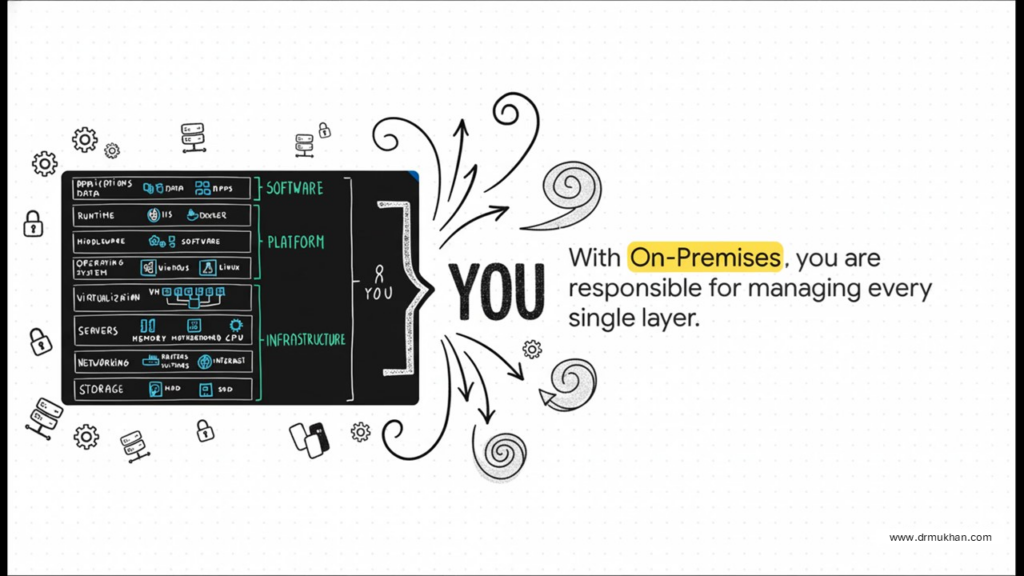
Then you start layering on top of that, virtualization, an operating system like Windows or Linux, middleware. And then finally, way at the top, you get to your actual application and your data. Managing all of that, it’s a massive job. And here’s the kicker. See that giant bracket on the right? The one that says, “You manage?” In the old school world, what we call on-premises, every single one of those layers is your problem. You have to buy it, you have to rack it, you have to manage it.
And you have to fix it at 3 a.m. when it breaks. And just think about what that means. Every dollar and every hour your team spends wrestling with that mountain of hardware is a dollar and an hour they aren’t spending on what actually matters, making your product better or talking to your customers. It’s a huge distraction, and it’s the exact problem the cloud was born to solve.
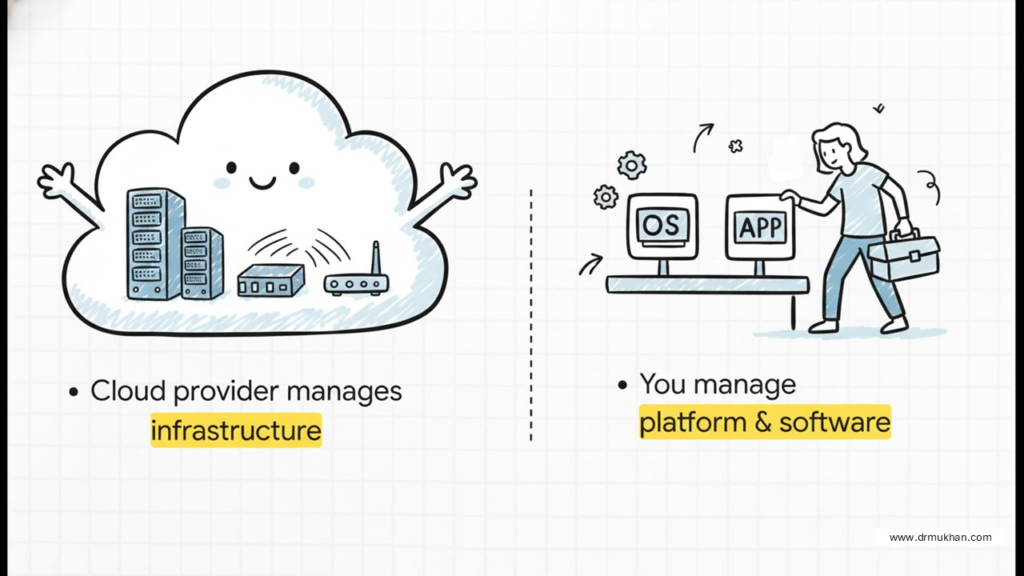
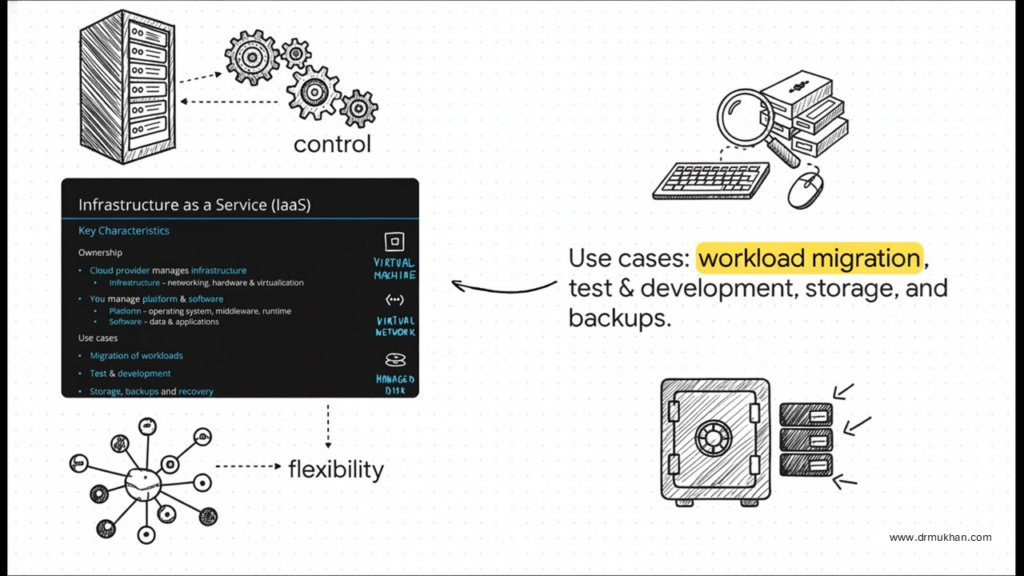
So what if you could just hand off some of that heavy lifting? Well, that brings us to our first cloud model, Infrastructure as a Service, or IaaS for short, which does all your heavy lifting. And just like that, the game completely changes. With IaaS, the responsibility gets split. A cloud provider, you know, like Amazon Web Services or Microsoft Azure, they take over all that foundational stuff. The physical servers, the storage, the networking. Poof!!!
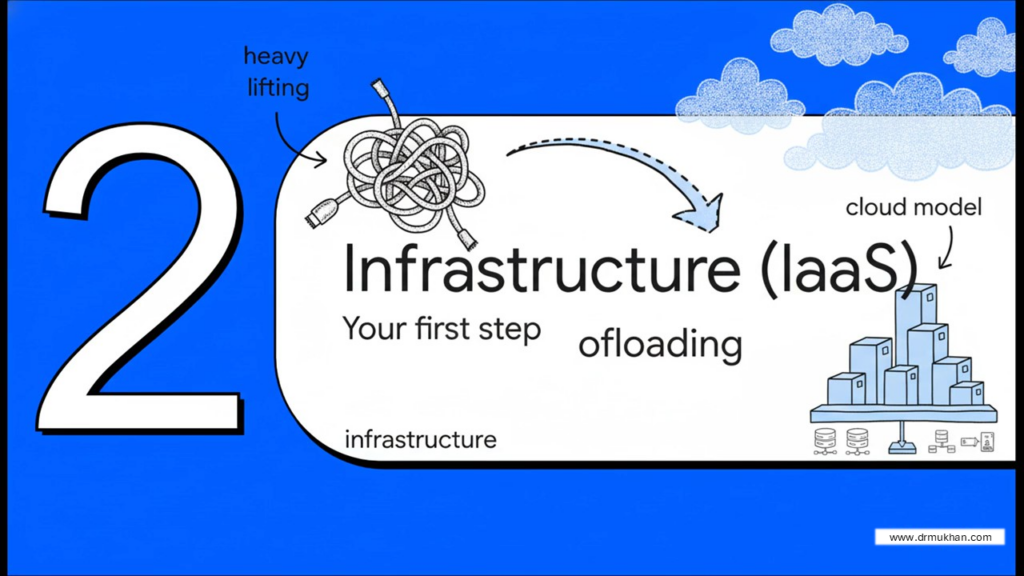
It’s their problem now. You don’t have to worry about buying or maintaining a single piece of hardware. What this means is you essentially get to rent virtual hardware that you can set up however you want. So your developers, they can spin up a brand new server for testing in just minutes, not the weeks it used to take. That just dramatically accelerates everything you do.
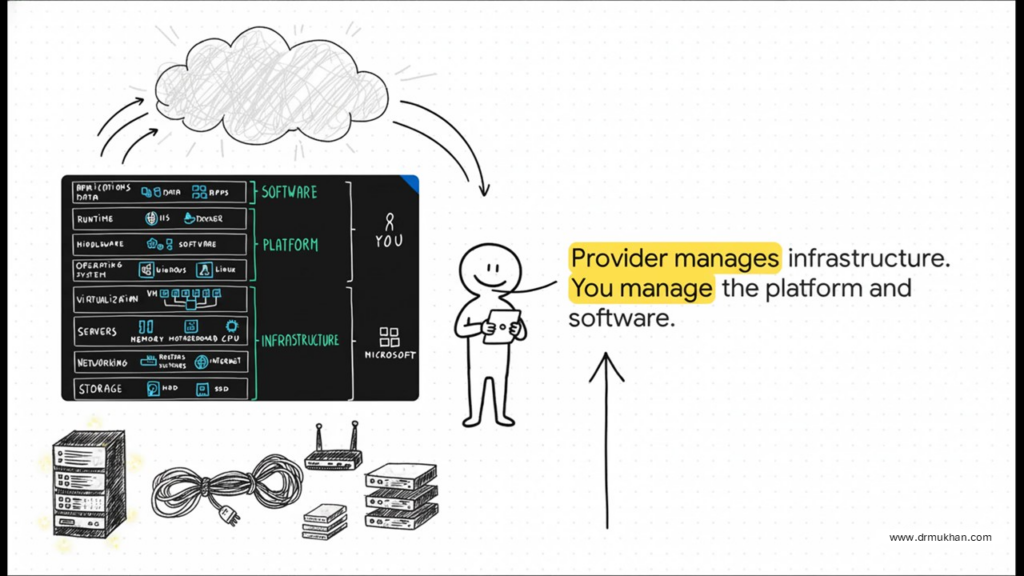
The best way to think about this is you’re renting the fundamental building blocks of a data center. It’s absolutely perfect when you need maximum control and flexibility, like say for migrating your existing applications, or for test and development, or just for simple storage and backups. Okay, so IaaS is great. It’s a huge step forward. But you’re still managing things like the operating system and all those annoying security patches. What if we could simplify it even more, so you could just focus on your code?
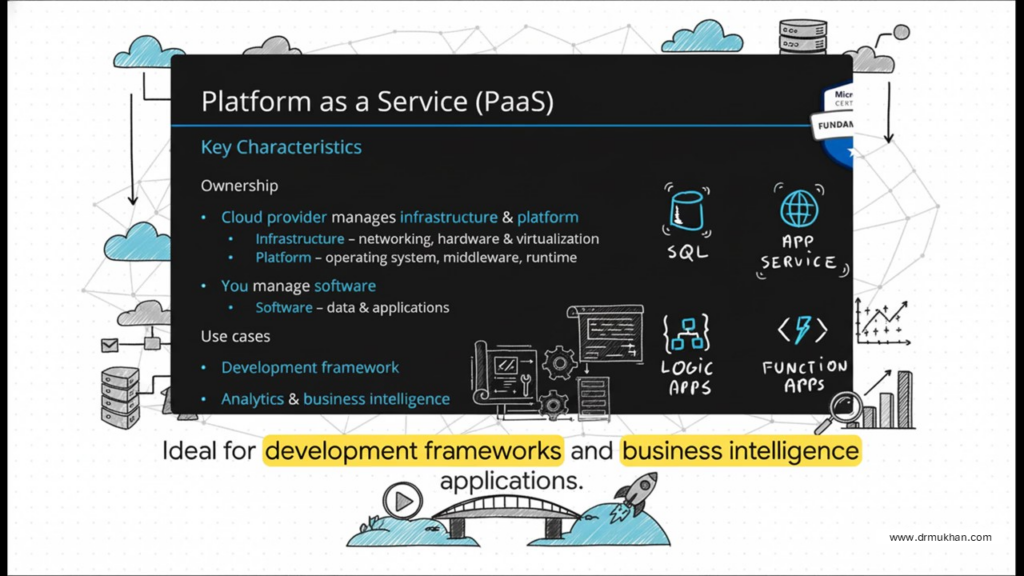
And there it is. Look how that line of responsibility just shot up the stack. With Platform as a Service, or PaaS, the provider now manages the entire platform for you. That means you can forget about OS updates, security patches, and middleware. All that stuff is handled. You literally just bring your application code and your data.
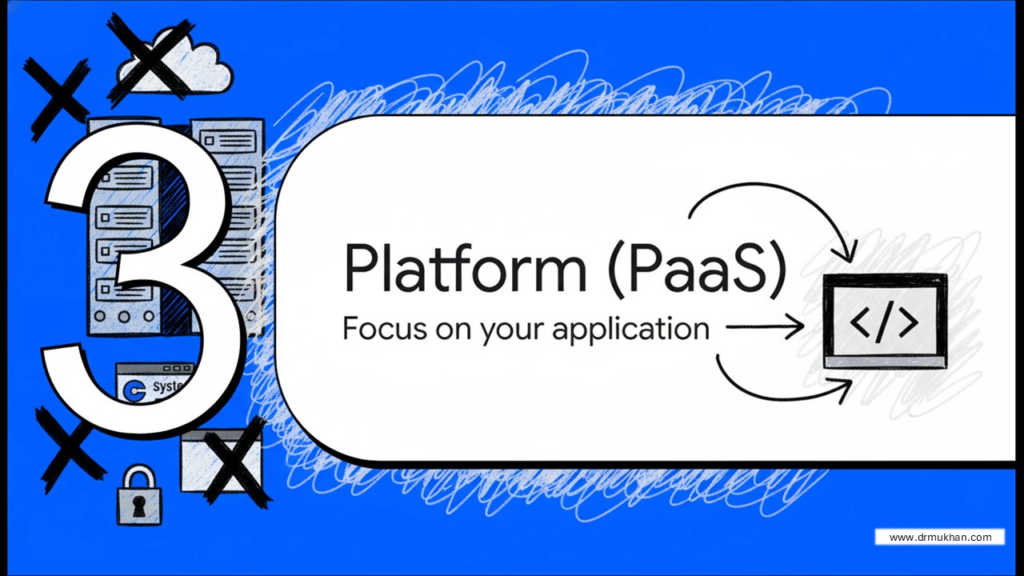
Here’s an analogy I love. If IaaS gives you an empty plot of land and a pile of bricks, PaaS gives you a pre-built foundation with all the plumbing and electricity already hooked up. You just get to focus on the fun part, building the house on top.
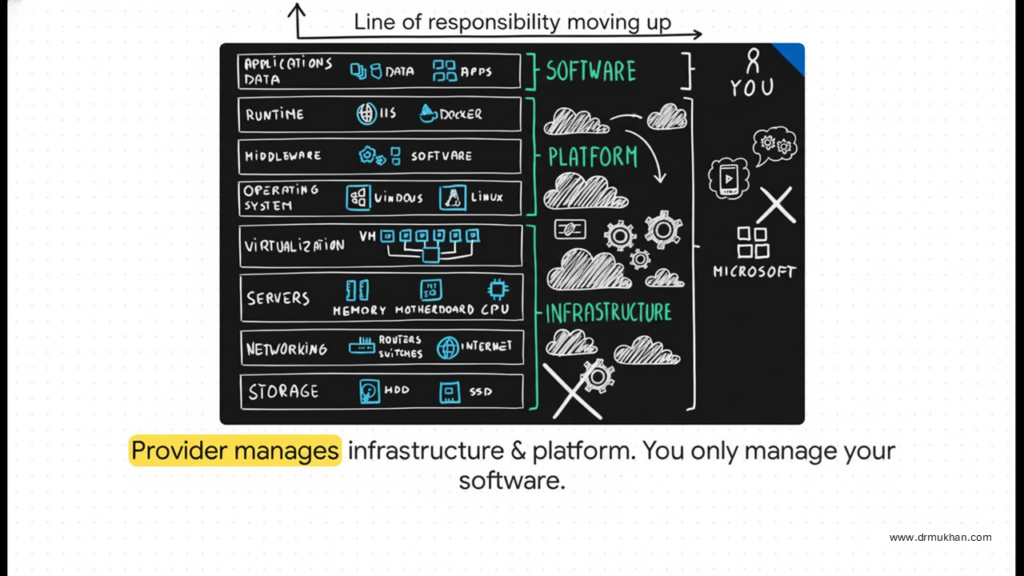
This model is a developer’s absolute best friend. It helps you create and deploy applications so much faster because you’re not getting bogged down by the underlying infrastructure. Need a database? Instead of spending days installing and configuring one, you just click a button. It’s a total game changer. All right, let’s take this one final step. What if you don’t even want to build a house at all? What if you just want to use an app that’s already built, fully managed, and just ready to go?
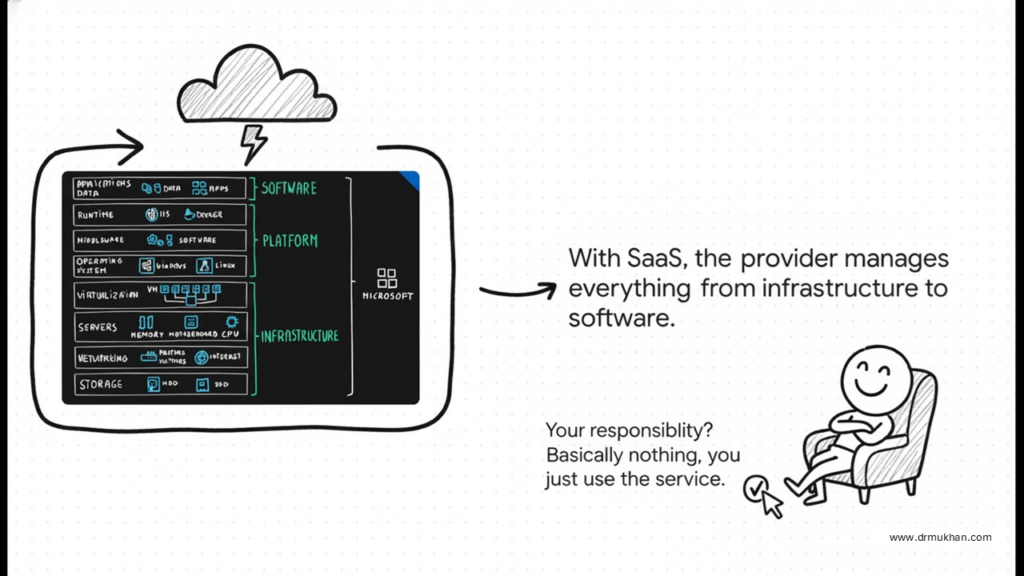
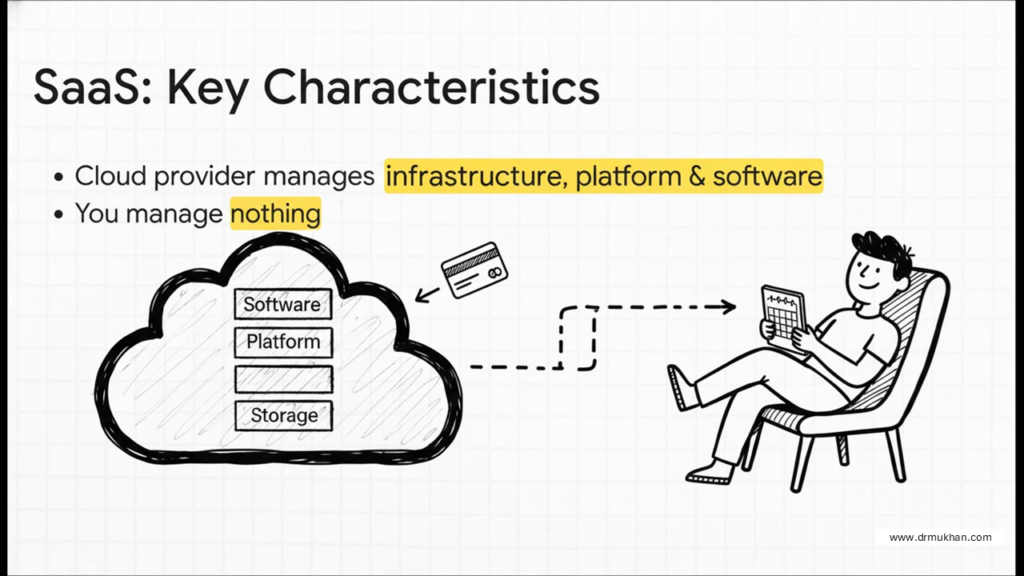
Well, this is it. This is the ultimate inconvenience. With Software as a Service, or SaaS, the provider manages absolutely everything. The entire stack, from the physical servers all the way up to the application itself. Your only responsibility is to log in and use it.
So here, you’re not buying infrastructure, you’re not buying a platform. You are simply subscribing to a finished product. All of the development, all the maintenance, all the updates, it’s all handled for you. You just pay your subscription and enjoy the service. And the funny thing is, you are already a SaaS expert, and you probably don’t even realize it. You use this stuff every single day. Every time you check your email in Outlook, store file in OneDrive, or hop on a Skype call, yep, you’re using a SaaS application.
So there we have it. The big three: IaaS for control, PaaS for development, and SaaS for convenience (For a detailed discussion of the three cloud service model, please see our previous post AZ-900: Demystifying CapEx vs. OpEx and Cloud Service Models). Now, let’s bring this all home and make the choice crystal clear, i.e., ‘Choosing the Right Model’.
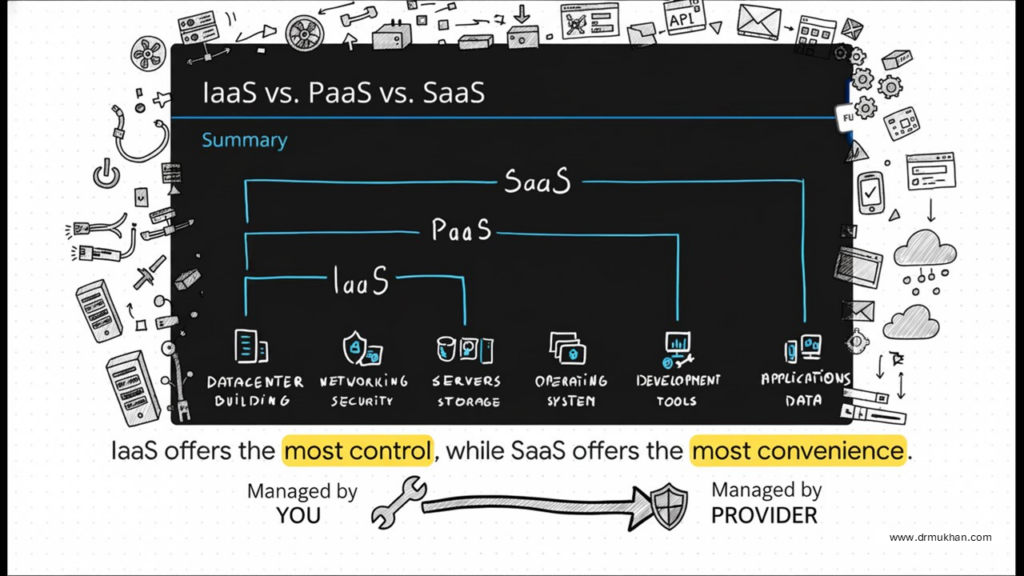
This just sums it all up perfectly. It’s really a spectrum, as shown in the figure below. On the far left with IaaS, you have the most control but also the most responsibility. And as you move to the right, through PaaS and SaaS, you’re basically trading some of that control for more and more convenience, as the provider takes on more of the management for you.
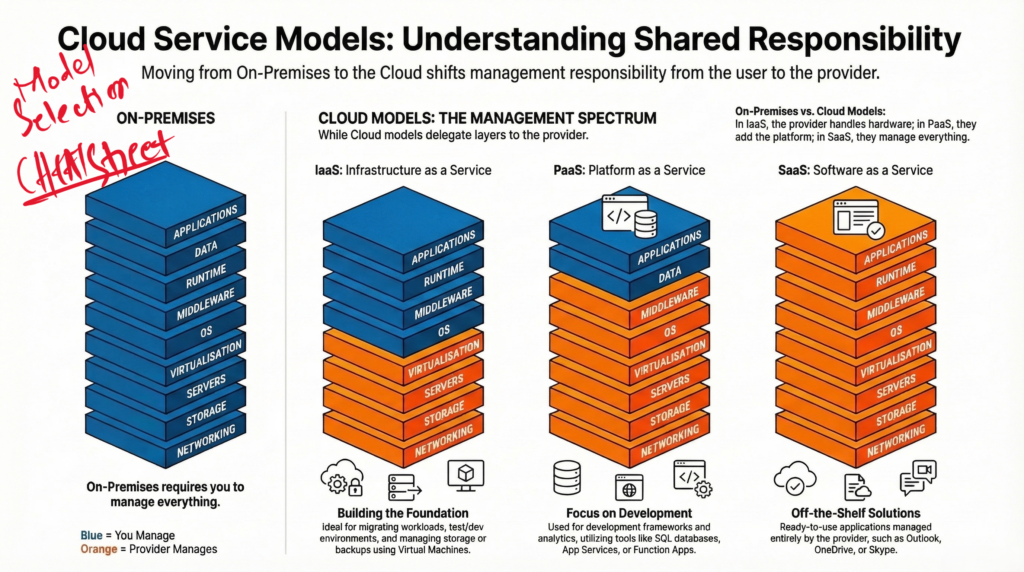
And here is the ultimate cheat sheet as illustrated in the figure below. With IaaS, you’re still managing the platform and the software. With PaaS, you only have to manage your software. And with SaaS, you manage nothing. It all boils down to this. The less you have to manage, the more you can focus on your actual business.
So we’re back to that brilliant idea you had at the beginning, but now you know the tools at your disposal. So which cloud model is it going to be? Do you need total granular control? IaaS is your answer. Do you want a powerful platform to build your own custom app fast? Go with PaaS. Or do you just need a solution that works, right now, out of the box? Well then, SaaS is your friend. The choice is yours!
Best of Luck!