
Topics to be covered in this post are:
- Single Attacker Scenario –DoS Attack
- Multiple Attackers Scenario –DDoS Attack
- Traffic Flow Management – Crowd Control System
- DDoS Protection System – Security Shield
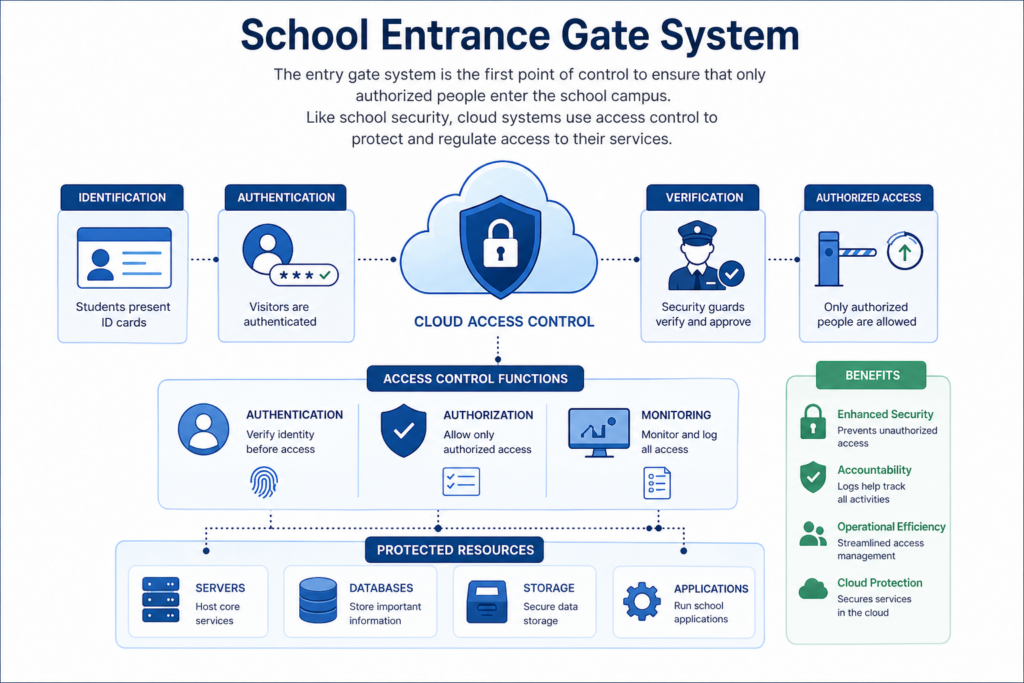
School Entrance System
DoS attack and DDoS attack are among the significant cloud computing issues. The purpose of such attacks is to disrupt services by overwhelming systems with excessive traffic. In order to illustrate the idea, Azure DDoS protection may be viewed as a school security system that allows entry into the institution.
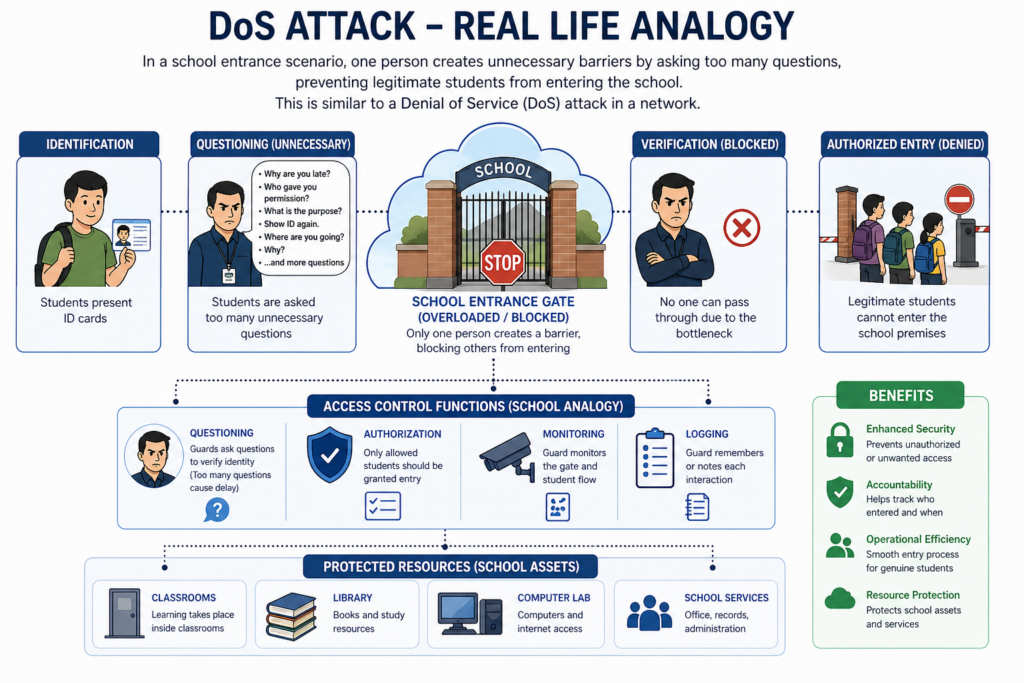
DoS (Denial of Service)
Take an example where there is only one person standing at the entrance of the school gate and creating barriers for entry by posing unnecessary questions. This results in others not being able to enter the school premises due to that reason. In this case, a real-life analogy of DoS attack can be taken into consideration, where the sole attacker sends numerous requests to the server, overwhelming it and preventing legitimate users from accessing the service.
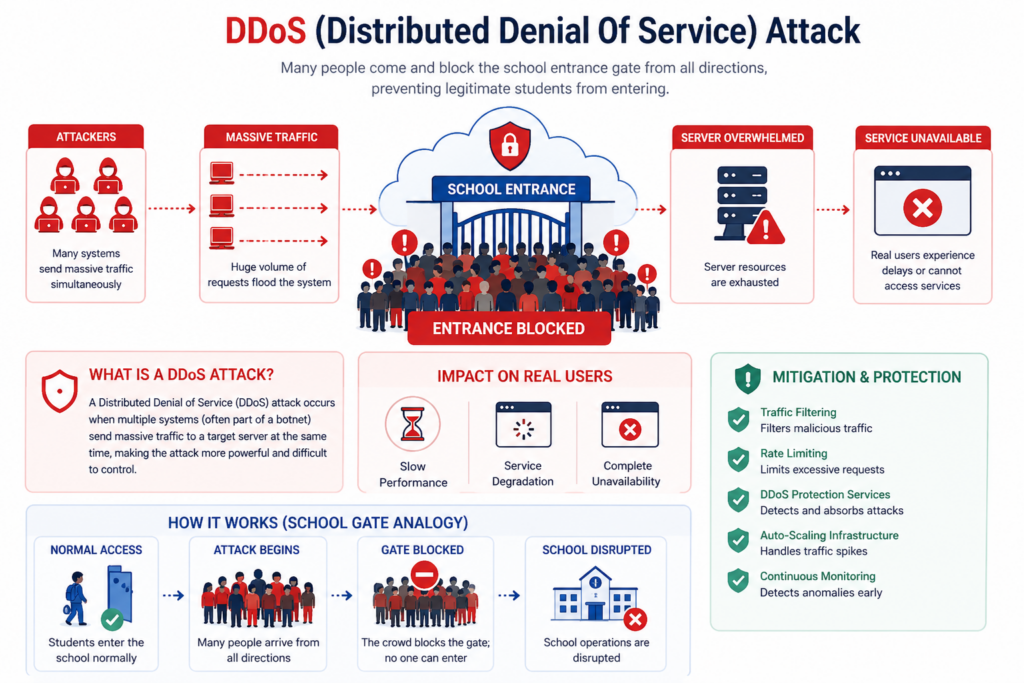
DDoS (Distributed Denial of Service)
Consider a situation that is a little more serious in nature where many people come and sit near the entrance gate of the school and start blocking the entrance gate from all directions. There are many people who cannot even enter the school anymore. This is called a DoS Attack where multiple systems send massive traffic to a server at the same time, making the attack more powerful and difficult to control. Real users experience delays or complete service unavailability because the system is overwhelmed by traffic.
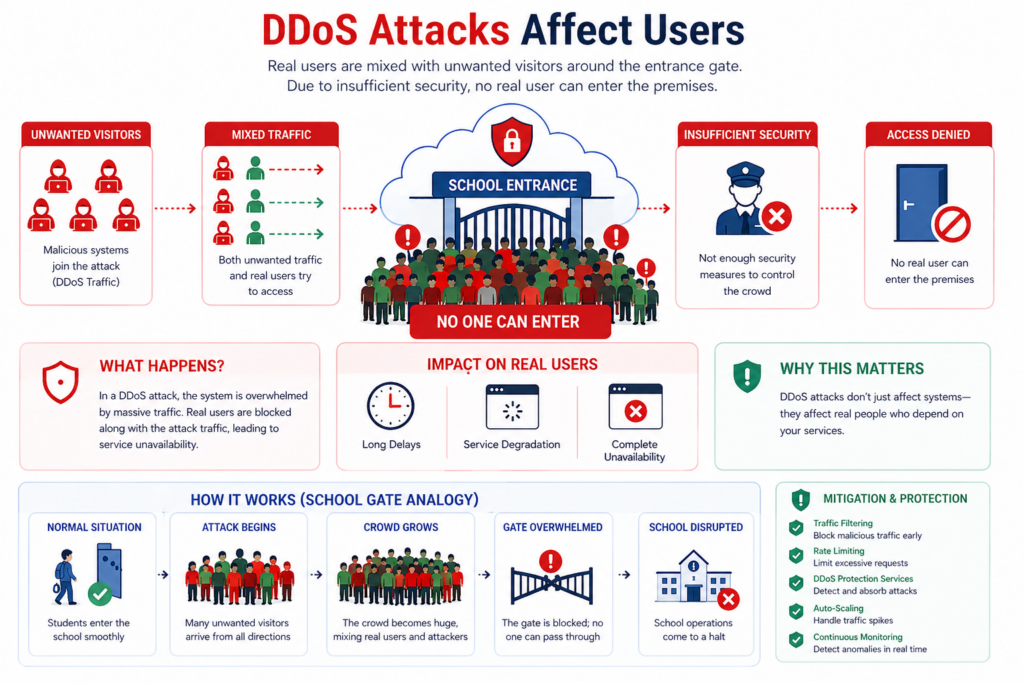
DDoS Attacks Affect Users
At that point, there will be real users along with some unwanted visitors around the entrance gate. Since there will not be enough security measures to guard the premises, no real user will be able to enter the premises. If the attack is from DDoS attacks, the same scenario will prevail.
Azure DDoS Protection
Consider the scenario where the school has appointed security guards who are professionally trained. Such security guards will serve the purpose of Azure DDoS Protection. They will scan the crowds of people and filter those who pose any kind of threat. This way, only real students can enter the school and all other activities can go on smoothly. Microsoft Documentation here.
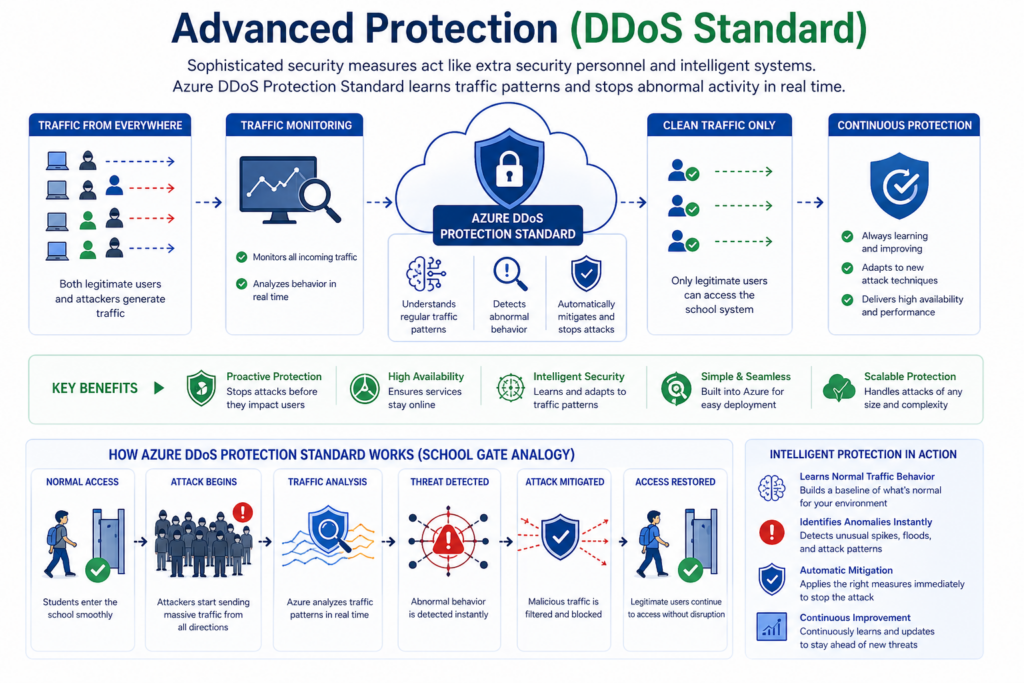
Advanced Protection (DDoS Standard)
In order to provide enhanced security, some institutions use sophisticated security measures such as extra security personnel and enhanced security methods. Azure DDoS Protection Standard works in the same way. It offers intelligent security measures that understand regular traffic patterns and immediately recognize abnormal behavior. It learns normal traffic behavior and can quickly identify and stop unusual or harmful activity.
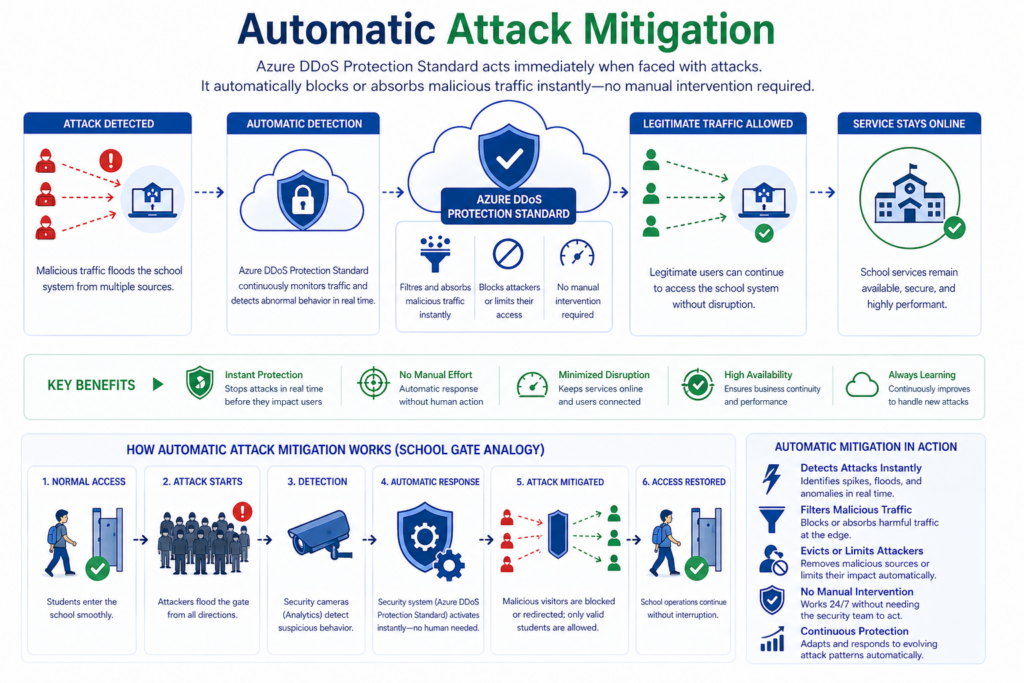
Automatic Attack Mitigation
Should there be any efforts from different persons who want to hack into the computer system, the security team will react promptly to the intruders by evicting or limiting access to them as illustrated by the Azure technology that acts immediately when faced with DDoS attacks. It blocks or absorbs malicious traffic instantly without requiring manual intervention.
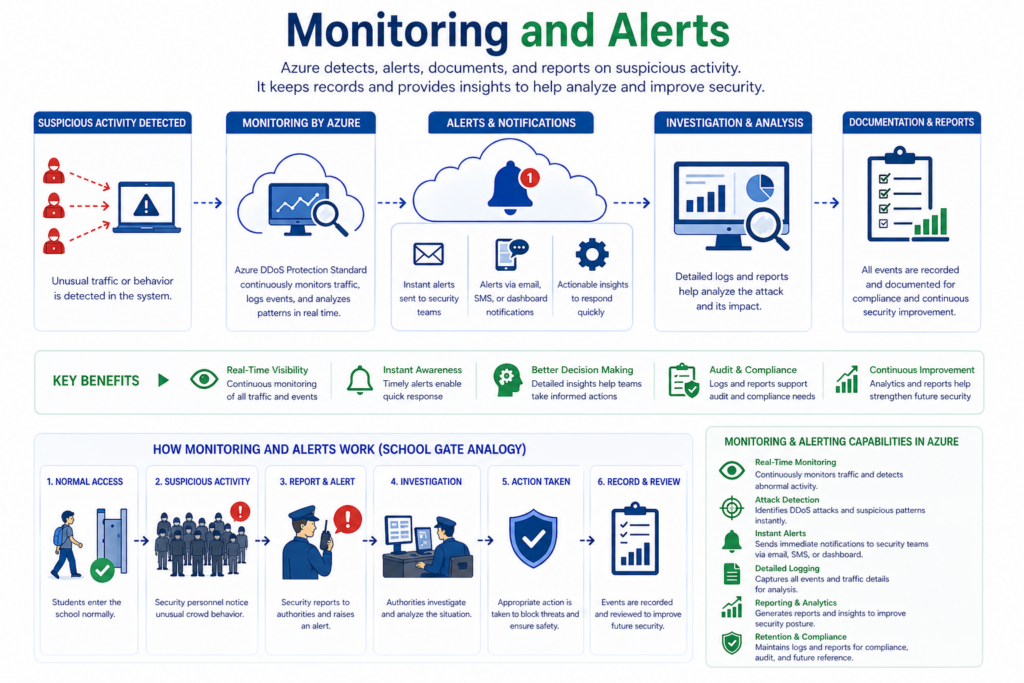
Monitoring and Alerts
Whereas security personnel in educational institutions have the capability of reporting any suspicious behavior to the relevant authorities, similarly, Azure has the capability of detecting and alerting on any attacks. Moreover, documentation is carried out to enhance the level of security. It also keeps records and reports to help analyze and improve security.
Conclusion
In conclusion, the school entrance gate system provides a simple way to understand Azure DoS and DDoS Protection. A single troublemaker represents a DoS attack, while a crowd blocking the gate represents a DDoS attack. Azure DDoS Protection acts like a smart security system that filters out unwanted traffic and ensures that only legitimate users can access services. This keeps cloud applications secure, stable, and always available.